10 November 2026
Home lift materials: begin with what is already there
A home usually has a material language before a new element arrives. It may be the timber in a staircase, the tone of the flooring or the metal finish on nearby doors. Gathering those references gives a design conversation a clear starting point.
You do not need a complete mood board. A few photographs of the surrounding room, a sample you already have and a note about what you want to preserve can be more helpful than a large collection of unrelated inspiration images.
Think in relationships
Materials are experienced together. A brushed surface may read differently beside warm timber than beside pale stone. Glass can change what you see through a space, while the frame around it contributes another line to the room.
Rather than asking for every element to match, consider whether you want continuity or a gentle contrast. Explain that preference to the team, then ask which choices are actually available for the model and configuration being discussed.
Bring daylight into the conversation
Take room photographs at more than one time of day if it is practical. They can help communicate the atmosphere of the space, even though a screen cannot represent colour or reflection exactly. If samples are available, ask how to review them alongside the surrounding interior before confirming a selection.
A digital render is a useful conversation tool, not a substitute for checking the agreed finish and written specification. Keep a distinction between an inspiration palette and a confirmed product option.
Edit the palette down
Try describing your intended direction in a sentence: quiet and light, warm and architectural, or restrained and contrasting. That helps keep the conversation focused. It also leaves room for the team to suggest how the available product choices might fit your brief.
Our collection pages introduce the range. To discuss the details for your own space, bring your references to a consultation. The final combination should be confirmed in the project specification rather than inferred from a gallery image.
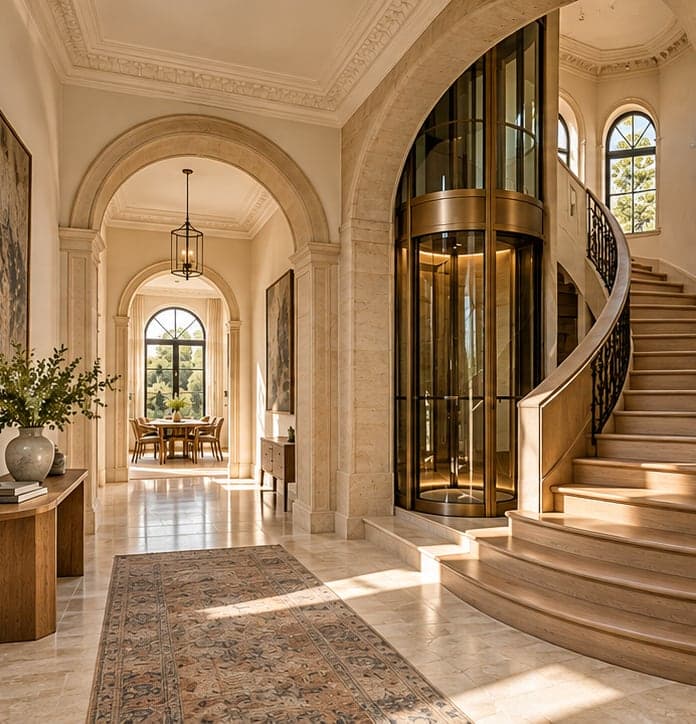
The cover is an AI-generated material study. It does not show a catalogue of available finishes or a completed Australia Lift project. Range reference: Australia Lift models.